Physical Security Systems & Protection Design
Physical Security for Facilities and Residences defines the process of designing, implementing, controlling, and verifying a premises security system based on defined security requirements and operational conditions. Security measures are implemented through a layered system integrating perimeter security, access control, internal zoning, electronic systems,…
- Delivery
- Online
- Duration
- Self-paced online
- Assessment
- Scenario-based assessment
- Course application
- Apply for this course
What you will learn and demonstrate.
Course Overview
Physical Security for Facilities and Residences defines the process of designing, implementing, controlling, and verifying a premises security system based on defined security requirements and operational conditions.
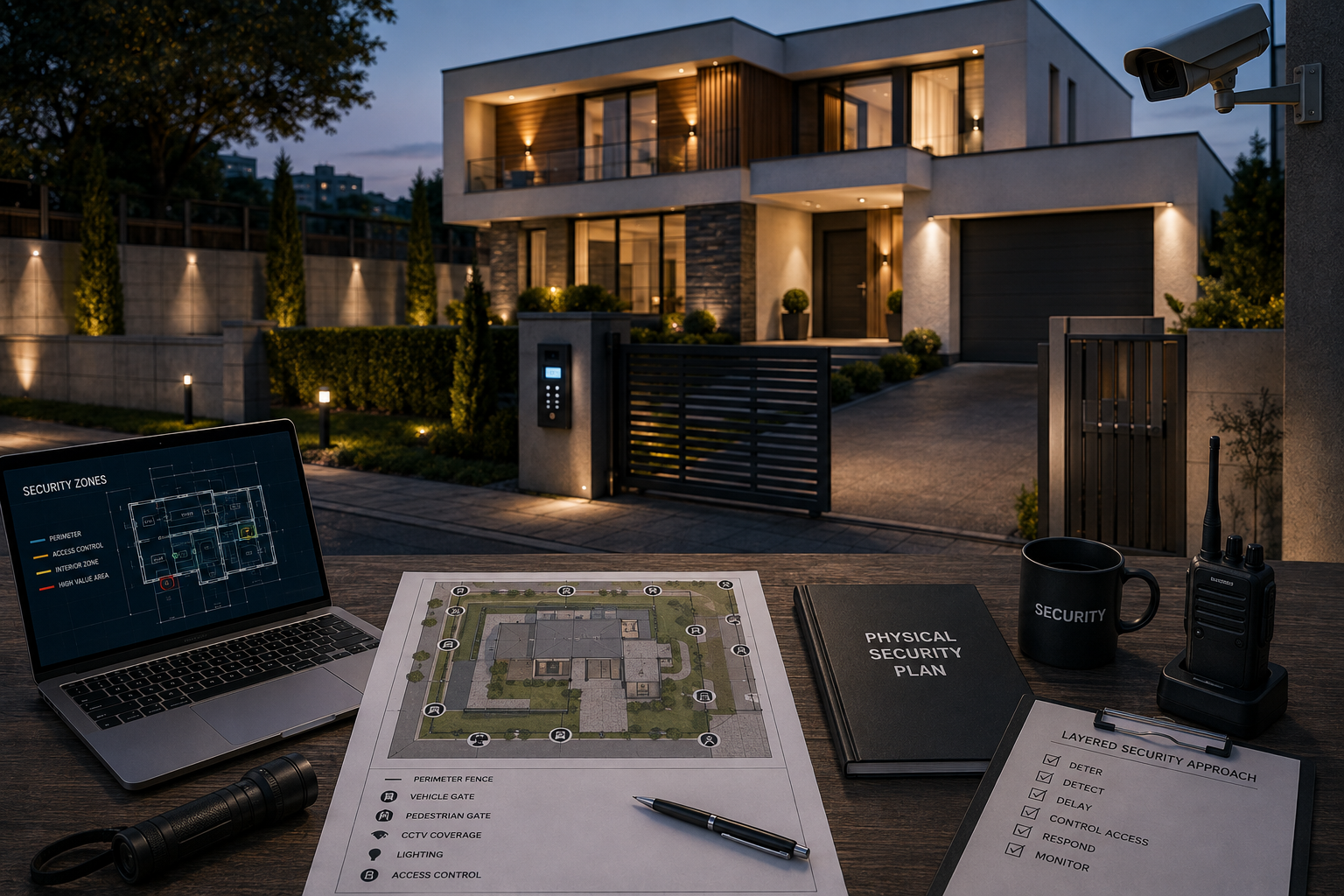
Security measures are implemented through a layered system integrating perimeter security, access control, internal zoning, electronic systems, guard force, and emergency response.
All measures shall apply defence-in-depth and remain operational under routine and crisis conditions, ensuring detection, deterrence, delay, and response capability.
The system integrates physical, technical, procedural, and human components to ensure functionality, control, and continuity of operations.
The final output is a structured, traceable, and executable Physical Security Plan that supports operational deployment, system control, and decision-making.
Capability Development Chain
System Design → Measures → Integration → Implementation → Control → Verification → Decision
Participants must
- design physical security systems
- apply and implement security measures
- establish layered protection systems
- verify system functionality and effectiveness
- maintain operational control of the security system
- identify and correct system weaknesses
Key Concepts
- Application of layered security to prevent single-point failure
- Application of Detect, Deter, Delay, Deny to achieve system effectiveness
- Establishment of controlled perimeters and secure boundaries
- Implementation of access control to verify identity and authorization
- Establishment of internal zoning to control movement and protect assets
- Integration of physical, technical, procedural, and human security components
- Maintenance of system functionality, control, and operational continuity
- Enablement of detection, response, and incident containment
- Integration of safety and security requirements
- Continuous verification and improvement of system performance
MODULE 1: PHYSICAL SECURITY FUNCTION & RESPONSIBILITY+
Purpose
Establish responsibility, authority, and control of premises security systems.
Learning Outcomes
- assign responsibility for premises security
- establish authority and control structure
- apply defined level of protection
- implement assigned security requirements
- enforce duty-of-care requirements
- ensure accountability for implementation and control
Key Exercises
- assign roles and responsibilities
- establish authority and reporting structure
MODULE 2: SECURITY PRINCIPLES ENFORCEMENT+
Purpose
Apply core security principles to ensure system effectiveness.
Learning Outcomes
- apply detect, deter, delay, deny
- establish layered protection (defence-in-depth)
- ensure system balance and eliminate weak points
- integrate physical, technical, procedural, and human measures
- identify and remove ineffective measures
Key Exercises
- map measures to Four Ds
- identify system gaps and weaknesses
MODULE 3: PERIMETER SECURITY SYSTEM+
Purpose
Establish and control the security boundary.
Learning Outcomes
- establish perimeter boundaries
- implement controlled entry points
- apply clear zones and visibility measures
- integrate surveillance and lighting systems
- verify perimeter control and intrusion detection
Key Exercises
- identify perimeter vulnerabilities
- design perimeter security system
MODULE 4: ACCESS CONTROL SYSTEM+
Purpose
Control and verify all access to the premises.
Learning Outcomes
- implement access control processes
- apply identification and authorization measures
- control personnel and visitor access
- manage keys, badges, and credentials
- apply screening procedures
- verify access flow and control effectiveness
Key Exercises
- design access control system
- identify bypass points
MODULE 5: VEHICLE ACCESS CONTROL+
Purpose
Control vehicle entry and prevent vehicle-based threats.
Learning Outcomes
- apply vehicle screening procedures
- establish vehicle access points
- implement barriers and denial measures
- separate pedestrian and vehicle access
- verify vehicle control effectiveness
Key Exercises
- design vehicle access system
- identify vulnerabilities
MODULE 6: INTERNAL SECURITY LAYERS+
Purpose
Control movement within the premises.
Learning Outcomes
- establish internal zones
- apply access restrictions
- control movement between zones
- establish protected areas and safe zones
- verify containment and control capability
Key Exercises
- design internal zoning
- identify internal vulnerabilities
MODULE 7: ELECTRONIC SECURITY SYSTEMS+
Purpose
Enable detection, monitoring, and response.
Learning Outcomes
- implement CCTV and alarm systems
- apply monitoring procedures
- establish response protocols
- identify system gaps
- verify system coverage and effectiveness
Key Exercises
- assess system coverage
- identify blind spots
MODULE 8: GUARD FORCE+
Purpose
Implement and control the human security component.
Learning Outcomes
- establish guard roles and responsibilities
- assign posts and coverage
- implement procedures and instructions
- verify supervision and discipline
- integrate guard force within the security system
Key Exercises
- design guard deployment
- develop post orders
MODULE 9: BLAST & STRUCTURAL SECURITY+
Purpose
Reduce impact of explosive and structural threats.
Learning Outcomes
- apply standoff requirements
- identify structural vulnerabilities
- implement mitigation measures
- apply protective design measures
- verify protection effectiveness
Key Exercises
- assess exposure
- define mitigation measures
MODULE 10: FIRE SAFETY & EMERGENCY RESPONSE+
Purpose
Ensure life safety and emergency response capability.
Learning Outcomes
- establish evacuation routes
- assign responsibilities
- verify detection and alarm systems
- ensure communication capability
- remove evacuation barriers
Key Exercises
- design evacuation plan
- identify failures
MODULE 11: RESIDENTIAL SECURITY+
Purpose
Apply security measures to residential environments.
Learning Outcomes
- identify residential security conditions
- establish perimeter protection
- apply locks, lighting, and alarm systems
- establish safe haven
- apply behavioural security measures
Key Exercises
- conduct residential assessment
- define mitigation measures
MODULE 12: SECURITY PLAN INTEGRATION+
Purpose
Integrate all measures into a functional security system.
Learning Outcomes
- build security system structure
- assign roles and responsibilities
- implement procedures
- ensure system integration and coherence
- verify completeness and functionality
Key Exercises
- build system structure
- validate system
MODULE 13: IMPLEMENTATION & CONTROL+
Purpose
Ensure execution and continuous control of the security system.
Learning Outcomes
- implement security measures
- assign responsibilities
- track implementation progress
- conduct inspections
- maintain system performance
Key Exercises
- build tracking system
- conduct system inspection
MODULE 14: FINAL OPERATIONAL SCENARIO+
Purpose
Validate full operational capability of the security system.
Learning Outcomes
- design full security system under operational conditions
- apply all modules in an integrated manner
- assign measures and responsibilities
- justify decisions
- deliver operational briefing
Key Exercises
- execute full scenario
- present decisions
Need help choosing the right training?
Tell us the role, capability, or operational requirement you need to address.
Apply for this course.
Submit your course selection and applicant details. Supporting documents are requested separately after review.
Need this capability across an organization or public-service unit?
We adapt course scope, scenarios, delivery, and assessment to your staff, mandate, and operating environment.