Armorer/Firearms Operator
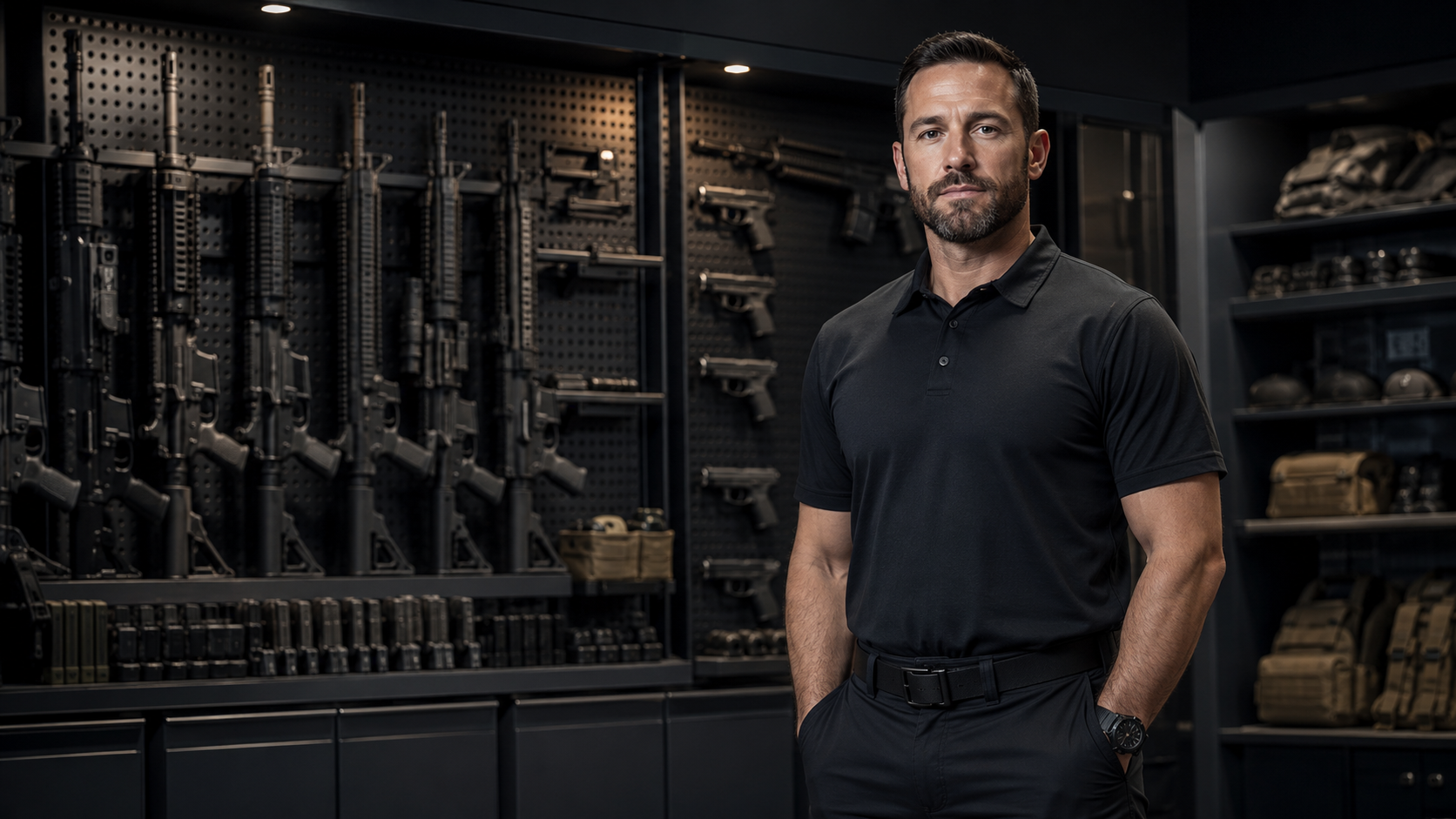
This intensive three-day programme develops dual professional competencies: Armorer competence — inspection, maintenance, diagnostics, repair, reassembly, function-testing, and documentation
- Delivery
- On-site
- Duration
- Scheduled on-site
- Assessment
- Practical performance assessment
- Course application
- Apply for this course
What you will learn and demonstrate.
Mission
The Armorer / Operator Programme is designed to develop, assess, and certify operational capability in armorer / operators to safely handle, maintain, and sustain assigned weapon systems, ensuring reliability, safety, and effective application under defined operational conditions.
Course Overview
This intensive three-day programme develops dual professional competencies:
Armorer competence — inspection, maintenance, diagnostics, repair, reassembly, function-testing, and documentation
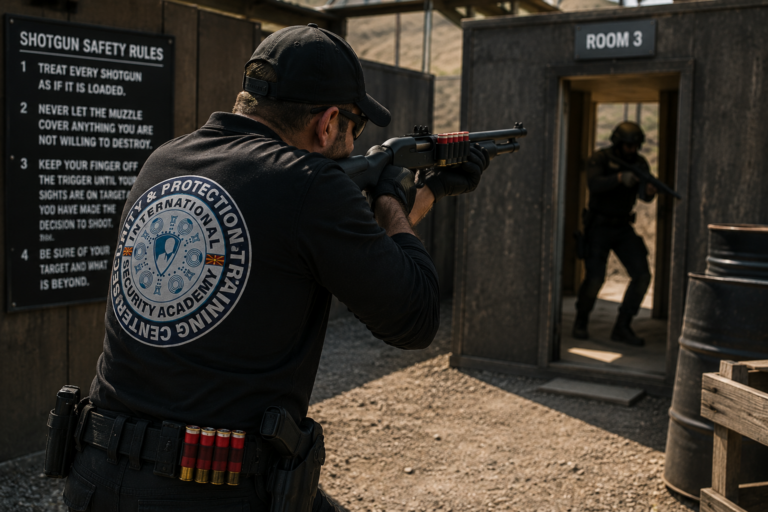
Operator competence — safe handling, loading/unloading, function checks, malfunction clearance, and controlled live-fire application
The course combines technical bench-work with live-fire evaluation, ensuring participants can sustain weapon reliability and operate assigned firearms safely, lawfully, and effectively under defined operational conditions.
The training is built for both organisational firearms custodians and operators who must maintain weapons to a dependable standard and perform safely under pressure.
Operational Doctrine
Weapons handling and maintenance are conducted using a safety-first, control-based, and reliability-focused approach.
Threat / Risk Context → Weapon System Assignment → Safety Control → Maintenance & Reliability → Functional Readiness → Operator Handling → Decision → Execution → Review / Update
All actions are guided by:
- Safety as the primary priority
- Control of weapon at all times
- Prevention of negligent discharge
- Reliability through correct maintenance
- Discipline in handling and procedures
- Lawful and proportionate use of force
- Integration with operational tasks
Competency Framework
Weapon handling and sustainment capability is defined through demonstrated competencies.
A competency is the ability to:
- make correct decisions
- handle weapons safely and effectively
- apply correct maintenance procedures
- deliver operational outcomes under realistic conditions.
All competencies in this course are:
- observable
- measurable
- tested under pressure
- validated through performance
Competency is not based on knowledge alone, but on the ability to apply knowledge in execution.
Performance Standards
All participants are evaluated based on:
- Safe weapon handling
- Control and discipline
- Accuracy and consistency
- Correct decision-making
- Maintenance reliability
- Compliance with safety procedures
Scenario System
All practical training is conducted through controlled scenarios aligned with operational use of firearms, including:
- handling the weapons
- malfunction conditions
- live-fire control
- safety-critical situations
Scenarios introduce:
- time pressure
- cognitive load
- decision-making requirements
Stress Model
Training integrates controlled stress factors including:
- time pressure
- performance under observation
- cognitive load
- decision-making under constraints
Operational Output
Successful completion confirms that the candidate can operate safely, reliably, and in accordance with defined operational standards under realistic conditions, including:
- safely handle assigned weapons
- maintain and inspect weapon systems
- diagnose faults and ensure reliability
- apply lawful and proportionate use of force
- operate safely under controlled live-fire conditions
Key Concepts
- Armorer responsibilities, legal obligations, and weapon safety principles
- Component identification and controlled disassembly/reassembly
- Diagnostic inspection, wear patterns, corrective maintenance, and reliability assurance
- Magazine function, feed system troubleshooting, cleaning schedules, and lubrication standards
- Operator-level handling, loading/unloading, command language, and dry-practice discipline
- Malfunction recognition, immediate actions, and live-fire control
- Sight adjustment, zeroing procedures, and ballistic fundamentals
- Integration of bleeding-control skills into weapons-related incidents
Module 1: Armorer Foundation & Safety+
Takeaways
- Understand operational, and safety responsibilities of an armorer
- Identify major components of pistol, carbine rifle, and shotgun platforms
- Apply disciplined bench-work procedures
- Conduct controlled disassembly, reassembly, and function-testing
- Implement correct documentation standards
Key Exercises
- Complete component identification drills
- Perform full disassembly/reassembly cycles under supervision
- Conduct and record function-tests
Module 2: Maintenance, Diagnostics & Magazines+
Takeaways
- Diagnose wear, mechanical faults, and feed issues
- Apply replacement standards and corrective maintenance
- Maintain magazine reliability through correct disassembly/assembly
- Apply cleaning, lubrication, and maintenance schedules
- Understand basic sight adjustment and zeroing theory
Key Exercises
- Conduct fault-diagnosis drills
- Inspect wear points and replace components
- Perform magazine rebuilds and feed-testing
Module 3: Operator Skills & Live Fire+
Takeaways
- Conduct operator safety checks and dry-practice drills
- Execute safe loading/unloading and clear-weapon commands
- Identify and clear malfunctions effectively
- Apply marksmanship fundamentals, firing positions, and sight corrections
- Perform live-fire engagements safely and consistently
Key Exercises
- Dry-fire sequences
- Malfunction recognition and clearance cycles
- Live-fire accuracy and control drills
- Zeroing and sight adjustment exercises
Module 4: Bleeding Control and Immediate support+
Takeaways
- Recognise signs of life-threatening haemorrhage (arterial, venous, junctional)
- Apply tourniquets correctly and document application time
- Perform wound packing and sustained direct pressure
- Maintain weapon safety while treating casualties
- Use PPE effectively and communicate with team and EMS
Key Exercises
- Tourniquet application drills
- Wound-packing and pressure-dressing practice
- Scenario: treat casualty while ensuring weapon remains safe
Module 5: Use of Force+
Takeaways
- Understand the legal and ethical principles that govern the use of force
- Distinguish between presence, verbal control, physical control, non-lethal options, and lethal force as last resort
- Distinguish clearly between non-force options (awareness, avoidance, escape, verbal disengagement) and defensive force
- Apply a simple civilian decision model under stress
- Understand post-incident civilian obligations
Key Exercises
- Civilian scenario analysis: identify no-force, escape, or defensive-force options and justify decisions using the civilian decision model
- Proportionality exercise: match threat levels to lawful civilian responses
- De-escalation decision drill: determine when disengagement is legally and tactically correct
After-Action Review (AAR)
Conducted at the end of each training block and at the end of each training day:
- Instructor-led evaluation of armorer and operator performance against defined safety, technical, and operational standards
- Identification of maintenance errors, handling deficiencies, and execution gaps
- Assessment of decision-making, control, and performance under pressure conditions
- Immediate correction and demonstration of correct technical and operational procedures
- Structured repetition to reinforce safe handling, reliability, and controlled execution
- Participant self-assessment focused on safety, discipline, and performance under defined operational conditions
- Reinforcement of accountability, weapon control, and adherence to procedures
Assessment
Grading Standard: Competent / Not Competent
Assessment Components
- Written exam: Use of Force, safety, weapon operation
- Practical bench test (inspection, diagnosis, disassembly/reassembly)
- Live-fire operator test (handling, accuracy, control)
- Practical TCCC assessment (tourniquet, packing, pressure, safety integration)
Failure Policy
- Failure of two or more components → course re-take
- Failure of one component → Remedial coaching + three re-assessment attempts is permitted.
- Unsafe handling → Immediate removal from training
Retake
If a participant does not pass the course:
- The participant is permitted to retake the course without an additional course fee
- The participant must restart and complete all required training components from the beginning
Retake eligibility is granted to support capability development and does not guarantee successful certification. Competence must be demonstrated under the same assessment conditions.
Retake Requirements
- All training modules and practical sessions must be re-attended
- All practical exercises and scenario-based assessments must be completed
- Final evaluation must meet ISA-MKD Competent grading standards
Certification Standard
Competent / Not Competent, supported by narrative instructor feedback.
Certification is awarded only to participants who demonstrate competent, reliable, and safe performance across all assessment components.
- Armorer / Operator – Pistol Certificate of Competence
- Armorer / Operator – Carbine Rifle Certificate of Competence
- Armorer / Operator – Shotgun Certificate of Competence
Instructors provide narrative evaluations highlighting strengths, areas for improvement, and readiness for certification.
Includes:
- 3 days training delivery
- 300 rounds
- Qualification-based training test
- Certification
- Weapon
Need help choosing the right training?
Tell us the role, capability, or operational requirement you need to address.
Apply for this course.
Submit your course selection and applicant details. Supporting documents are requested separately after review.
Need this capability across an organization or public-service unit?
We adapt course scope, scenarios, delivery, and assessment to your staff, mandate, and operating environment.